
Other Structures MFA Thesis Exhibition at San Francisco State University.
Choosing to focus on the mundane pleasures that can be observed amongst the chaos of urban growth and hyper interconnectivity, I re-consider the relevance of handcrafts in a technological age. Investigating pattern through material
exploration, I choose to use often undervalued hand processes such as sewing, printmaking and ceramics.
April 28–May 18, 2023


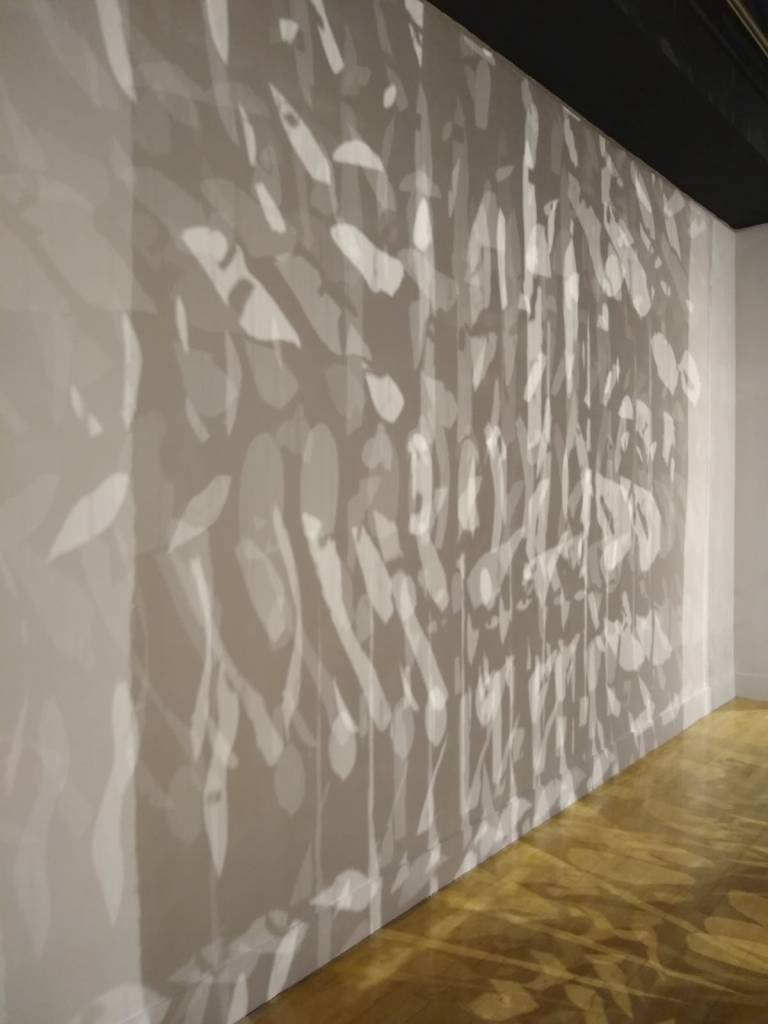
De/Re-Constructing City Patterns (2023) Secondhand fabric, secondhand thread, Janome sewing machine, HeatnBond, rotary cutter, Time, Energy, Patience.
Philippa Renshaw’s textile works are compilations of fragmented patterns found in the
everyday: shadows cast on the sidewalk, arches, corners, and slants of buildings, plus
other motifs of daily life. Mending a patchwork of collected memory, the artist turns
observation into inquiry through assemblage and appliqué; privileging the power of
the hand within the work’s production. Through material Renshaw grapples with the
capitalist evolution of masking the human hand’s presence in everything from urban
architecture to the clothes we wear.
Seeking the hand in everyday objects is a search for intimacy. In De/Re-Constructing
City Patterns Renshaw relies on what has been made by others through her use of re-
cycled materials and on the capability of her own two hands. The dependence on these
two elements is not only an attempt of making sense, but one of making touch between
object and person. The creation process is a space in which the person and object blend;
the object becomes human too.
The aesthetics of textile are often meant to be alluring and immaculate in their con-
struction, Renshaw achieves the allure but threatens construction by leaving large holes
in her textile works, allowing the edges to fray. This choice is a subtle critique of the
troubled ways capitalism relies on and exploits labor. To encourage unraveling is to
subvert the means of production. Allowing something to become undone is a risk that
motivates potential, the spreading edge of material is reaching for a second life. Ren-
shaw’s methodology behind her singular use of secondhand fabrics is metaphorically
akin to darning. This choice is born from a respect for the embedded labor, the material
itself, and a desire to reincarnate. Every bit is used; nothing is discarded. Renshaw’s
installation contains countless fingerprints from a lineage of makers.
Above written by essayist and artist,
Dionne Lee.
 philipparenshaw.com